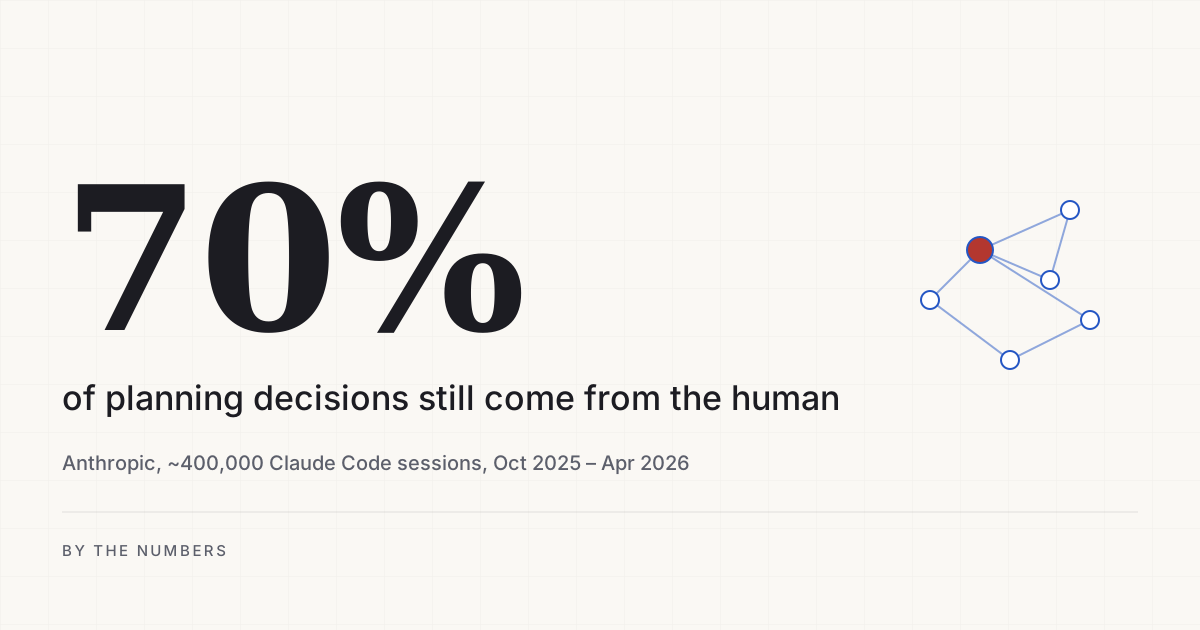
Anthropic published "Agentic coding and persistent returns to expertise" on June 16 — a privacy-preserving analysis of ~400,000 interactive Claude Code sessions from ~235,000 users, October 2025 to April 2026. In a typical session the user makes about 70% of planning decisions; Claude makes about 80% of execution decisions. People decide what to build, the agent decides how — and each prompt sets off about ten Claude actions, sometimes over a hundred.
What separates successful sessions is domain expertise, rated per task from the transcript — not job title. Novice-rated sessions reach verified success 15% of the time; intermediate and above, 28–33%. In sessions that hit verifiable trouble, novices abandon 19% of the time against 5–7% for everyone else, and experts get more per instruction: about 12 actions and 3,200 words per prompt versus 5 and 600. Most of the gain comes at the novice-to-intermediate step, and coding background adds little — in code-producing sessions, all ten of the largest occupation groups land within seven points of software engineers on verified success.
The work itself shifted over the seven months: fixing broken code fell from 33% to 19% of sessions, operating software grew from 14% to 21%, and writing and data analysis doubled to about 20%. As execution firms up, the human's specification work becomes the dominant variable in developer productivity. That is also the view from inside the lab: on July 3, Claude Code engineer Thariq Shihipar published "A Field Guide to Fable: Finding Your Unknowns" on X (2.1 million views as of July 5), writing that Claude Fable 5 is the first model where his output quality is "bottlenecked by my ability to clarify its unknowns" — the hardest being unknown unknowns, the questions he hasn't thought to ask. His remedies — blindspot passes, structured interviews, reference code, implementation plans — suggest the core skill of agentic coding is becoming requirements work, not prompt tricks.
The caveat is structural: this is the lab's own data about its own product, classified by its own models, with no view of whether session output is actually used, and non-interactive usage excluded. The number to watch is the one Anthropic names itself: if returns to expertise decay in future reports, models are starting to supply the judgment users now bring — and the bottleneck moves again.